
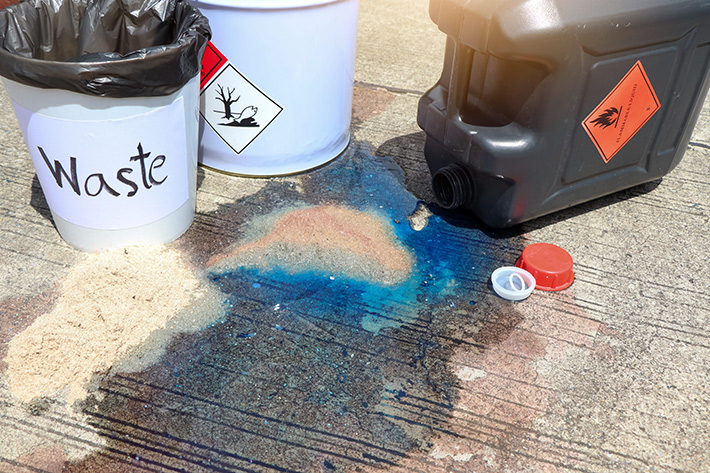
Garage cleanouts always start by sorting through boxes, busted shelving, and old equipment nobody uses. Then you hit the corner shelf. Half-used paint cans from three houses ago. Old pool chemicals. A propane tank you meant to return. Mystery bottles with faded labels. Suddenly, the project slows down, because you can’t treat that pile like ordinary junk.
Junk removal companies do not dispose of hazardous materials.
So it’s important for homeowners and property owners to understand how to handle these items safely and responsibly.
Many homeowners and property managers get mired in what to do with items you can’t just throw in the garbage. Regular junk is easy. Hazardous leftovers have rules, and for good reason. The goal is to clear the space without creating a mess, a fire risk, or a “where did we even put that” problem.
Here are some helpful tips for dealing with materials that require special disposal, from the pros at Mitten Junk Removal in Howell.
Why Garages Collect Hazardous Items So Easily
Garages are a perfect hiding spot for things you do not want in the house. Paint and stain. Gas cans. Fertilizer. Automotive fluids. Cleaning chemicals. When a project ends, the leftovers get pushed back onto a shelf “for later.” Later turns into years.
Michigan weather plays into it, too. Freeze-thaw cycles and humidity swings can cause containers to rust, swell, or crack. You may not notice until you pick one up and the bottom feels soft, or you see crusty residue around the lid.
The big rule: not everything belongs in a junk truck
A junk removal crew can take many items from a garage, but they typically cannot haul away certain hazardous materials through normal disposal channels. Even when something looks small, it might fall into a category that needs special handling.
Here are the items that most commonly cause a snag:
● Liquid paint, stain, varnish, and paint thinner
● Gasoline, diesel, kerosene, and mixed fuel
● Propane tanks and butane cylinders
● Pool chemicals and strong acids
● Pesticides, herbicides, and concentrated lawn chemicals
● Automotive fluids like motor oil, brake fluid, and coolant
● Batteries and anything leaking (car batteries are the usual culprit)
Some of these can be disposed of through local household hazardous waste programs. Some can be recycled through auto parts stores or other drop-off options. The right answer depends on what it is, how much you have, and whether the container is intact.
What you can do before a cleanout to make it go faster
If you want the cleanout to move smoothly, the best step is to separate the “hazard shelf” early. You do not need to sort it perfectly. Just get it out of the mixed pile so it does not slow everything down at the last minute.
A simple approach that works:
1. Pull all chemicals and liquids into one area. Put them on a tarp or in a plastic bin so leaks do not spread.
2. Keep labels facing out. If you can identify the product, you can find the right disposal option.
3. Do not combine liquids. Mixing is how you end up with fumes, heat, or a container that expands.
4. Set aside anything leaking or swollen. Treat it as a higher risk and avoid moving it around more than necessary.
If you have a lot, take a few quick photos. It helps a junk removal company tell you what they can haul and what needs a separate plan.
The “paint problem” in particular
Paint is the most common garage leftover, and it confuses people because it feels harmless. The practical divide is this: fully dried paint is usually treated differently from liquid paint.
If a can is mostly empty and the remaining paint is dried solid, it often becomes much easier to dispose of. If the can is full of liquid paint, it usually needs a hazardous waste drop-off.
A mistake people make is cracking open every can “to check” and leaving the lids loose afterward. That turns a stable can into a spill risk. If you are unsure what is in a can, treat it as liquid and keep it upright.
Propane tanks, fuel cans, and why crews hesitate
Propane cylinders and fuel containers are a safety issue in transport. Even “empty” tanks can contain pressure or residue. Fuel cans often leak at the spout or the seam, especially older ones.
If you have propane cylinders, it’s worth separating them and confirming whether your local exchange program will take them back. If you have fuel, look for household hazardous waste events or approved drop-off locations. It is not glamorous, but it is safer than hoping someone will “just take it.”
What junk removal can usually handle in a garage cleanout?
Once hazardous leftovers are separated, most of the rest of a garage is straightforward.
Typical haul-away items include:
● Old shelving, cabinets, and workbenches
● Cardboard, broken furniture, and general clutter
● Scrap wood and non-treated lumber
● Bikes, lawn equipment (without fuel), and bulky items
● Old appliances and metal items (depending on condition and rules)
The real win is when the hazardous pile is no longer blocking the rest of the project. Clearing the standard junk first also gives you space to deal with the tricky items without tripping over everything.
A realistic plan that avoids the “stuck halfway” feeling
If you are overwhelmed, do the job in two passes:
● Pass one: remove the normal junk and open up the space.
● Pass two: handle hazardous leftovers through proper drop-offs or scheduled events.
This keeps the project moving and prevents the common scenario in which everything stalls because of a single shelf of chemicals.
Garage and House Cleanouts Made Simple
If you want a garage cleanout that moves quickly, with clear guidance on what can be hauled and what needs a separate disposal plan, Mitten Junk Removal can remove the bulky items and general clutter, then help you identify the best next step for anything that requires special handling.
Mitten Junk Removal proudly helps residents and businesses throughout Howell, Brighton, and the surrounding areas with safe, responsible, and affordable junk removal and haul-away services. Call today or visit us online to request a Free Estimate.